
Beetroot Powder
Natural Food Coloring
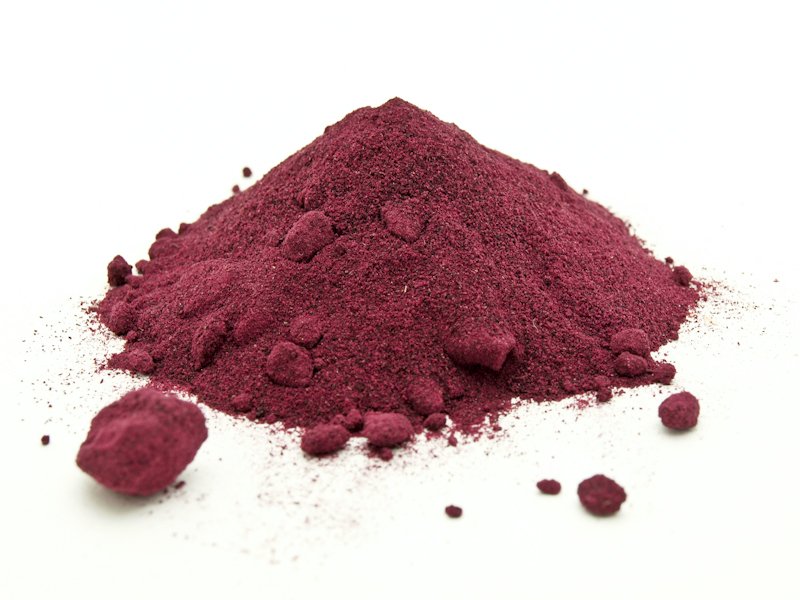
Beetroot Powder
Natural Food Coloring
Beta vulgaris
Beetroot is a biennial plant with leafy stems that can grow 1-2 m tall. The leaves of wild beets are heart-shaped, measuring 5-20 cm in length (much longer in cultivated beets).
Beetroot powder is obtained from the dried root, and one teaspoon is equivalent to a whole beetroot.
BUYING AND STORAGE
Store beetroot powder in a dark and dry place for up to a year.
CULINARY USE
Beetroot powder can be found in many industrial food products such as Bolognese sauces, salad dressings, and almost anything containing tomatoes often includes beetroot powder.
Compositionally, beetroot powder contains 1/10 of the sugar and is often used in the industry as a substitute for cane sugar. Some wines are made from beets, and due to their high sugar content, they are easily distilled.
Finally, beetroot powder can be used as a coloring agent for cosmetics, food, soaps, and clothing. In ancient times, women rubbed beetroot powder on their cheeks to achieve a rosy complexion. It is a perfect substitute for artificial red dye as it does not cause any allergic reactions.
GOOD FOR coloring, as a dietary supplement.
| Energy | 1419 kJ/ 340 kcal |
| Fats | 1 g |
| - of which saturated fatty acids | 0.2 g |
| Carbohydrates | 56 g |
| - of which sugars | 56 g |
| Proteins | 13 g |
| Salt | 2 g |
| Fibers | 23 g |

Latest Recipes
We bring you tried and tested recipes of our favorite dishes, culinary tips, and suggestions on how to best combine spices and ingredients for a complete sensory experience.
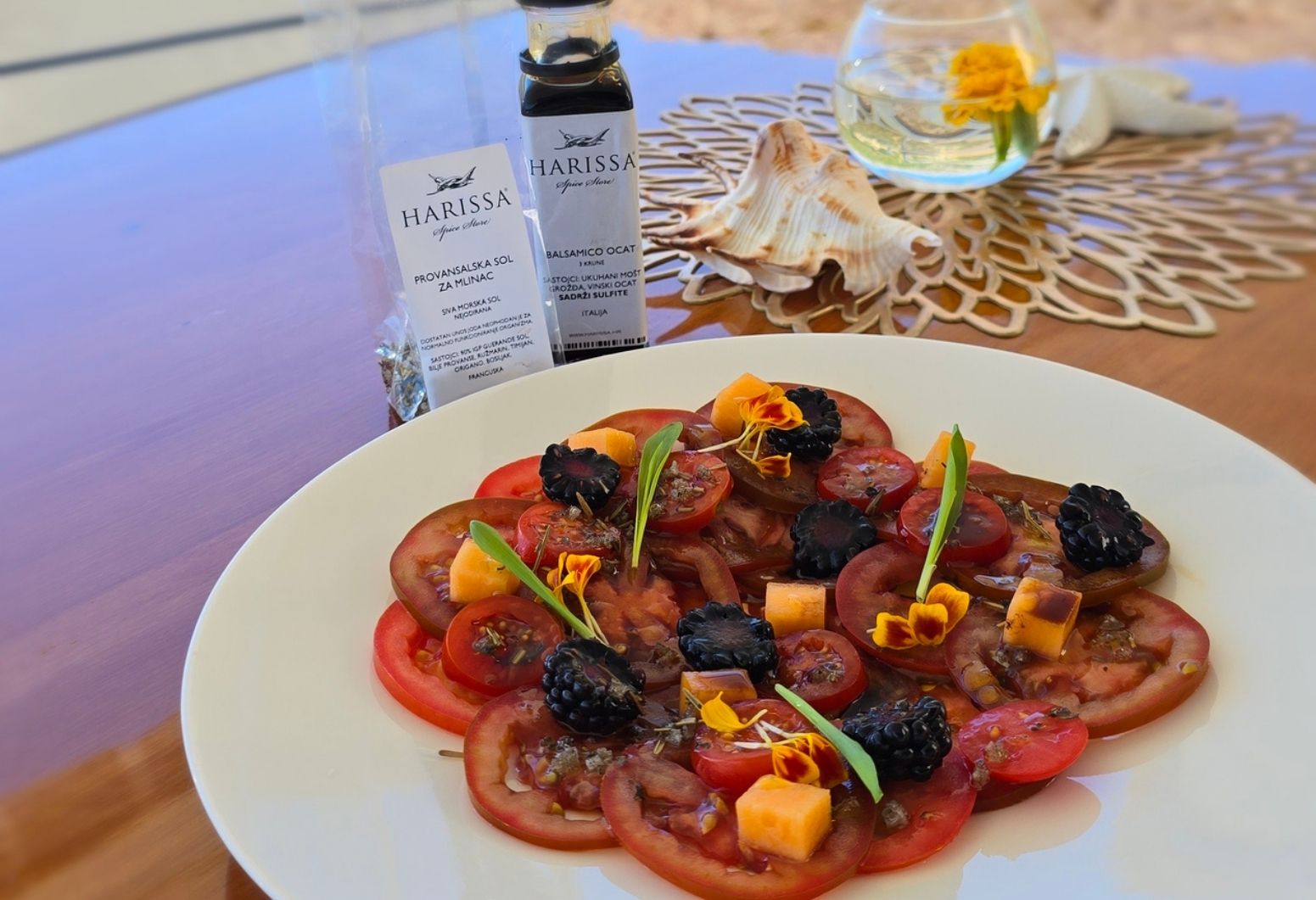
Summer Garden with Black Tomato, Melon, Black Raspberry and Harissa Provencal Salt
Summer Garden with Black Tomato
with Melon, Black Raspberry and Harissa Provençal Salt
Salad by Chef David Francesco Komadina