
Sesame Wasabi
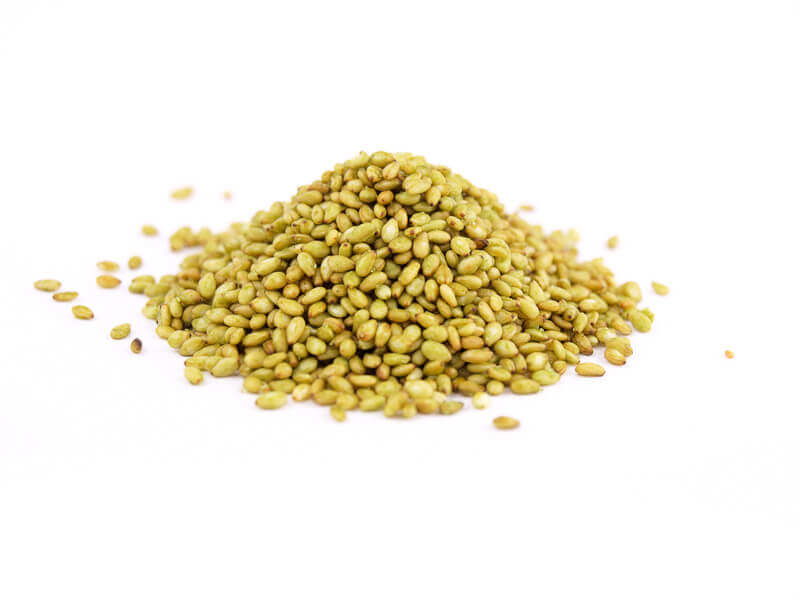
Sesame Wasabi
INGREDIENTS: toasted sesame seeds, acetic acid, wasabi, monosodium glutamate, sugar, dextrin
ALLERGENS: nuts, celery and celery products, mustard and mustard products.
Sesamum orientale
Sesame is one of the first plants to be cultivated for its seeds.
Egyptians and Babylonians used sesame in bread, a habit that is still present in the Middle East today.
Whole seeds are obtained from an annual tropical plant. Sesame can be pale gold or white, red, brown or black depending on the type. The seeds are small, flat and oval, shiny and waxy due to the oil they contain and relatively soft. Creamy white sesame is the most common.
In the Middle East, pale brown tahini (sesame paste) is mixed with garlic and lemon juice and as such is used as a base for numerous dressings with hummus, vegetable dishes and fish.
Wasabi is a Japanese plant, often called "japanese horseradish". It is used with sushi and sashimi, as a paste or sauce.
FLAVOR
Sesame seeds are not overly aromatic, but have a moderate nutty smell, which is even more pronounced if the seeds are toasted. Wasabi has a strong, specificly spicy flavor.
USED ARE whole seeds, oil and seed paste.
PURCHASE AND STORAGE
Sesame seeds can be found in most stores, and in some specialized ones you can also find tahini, dark Chinese sesame and dark sesame oil.
Store the seeds in tightly closed containers and toast them before use.
USE IN COOKING
Sesame is sprinkled on bread and pastries before baking. It is an indispensable ingredient of the Middle Eastern spice mix Za'atar and the Japanese seven spice mix. It is the most important ingredient of Middle Eastern halva.
The dark brown Chinese sesame paste and amber-colored oil are obtained from the toasted seeds. Toasting intensifies the nutty flavor and gives a darker color.
These products are widely represented in Chinese, Korean and Japanese cuisine. Asian oil is a spice oil and is not suitable for cooking because it burns at lower temperatures. Chinese sesame paste has a thick texture and is used in pasta, rice and vegetable dressings. The Chinese love the crunchy texture of sesame seeds, so they use them to "bread" shrimp balls and toasts.
In Japan, white or golden sesame is mixed with soy sauce and sugar and served as a dressing with cold chicken, pasta and vegetable salads. Black sesame is used in Chinese and Japanese cuisine as an addition to rice, vegetables, fish and seafood.
Flavored sesame is a great addition to sandwiches, tortillas and salads.
IT IS GOOD WITH aubergines, fish, green vegetables, pasta, rice, zucchini, salads, sandwiches, rolls.
COMBINED WELL WITH cardamom, cassia, chili, cloves, coriander, ginger, nutmeg, oregano, peppercorn, sumac, thyme.
| Energy | 0 kJ/ 529 kcal |
| Fats | 35.3 g |
| - of which saturated fatty acids | 0 g |
| Carbohydrates | 35.3 g |
| - of which sugars | 17.6 g |
| Proteins | 17.6 g |
| Salt | 0.0880 g |
| Fibers | 0 g |


Latest Recipes
We bring you tried and tested recipes of our favorite dishes, culinary tips, and suggestions on how to best combine spices and ingredients for a complete sensory experience.
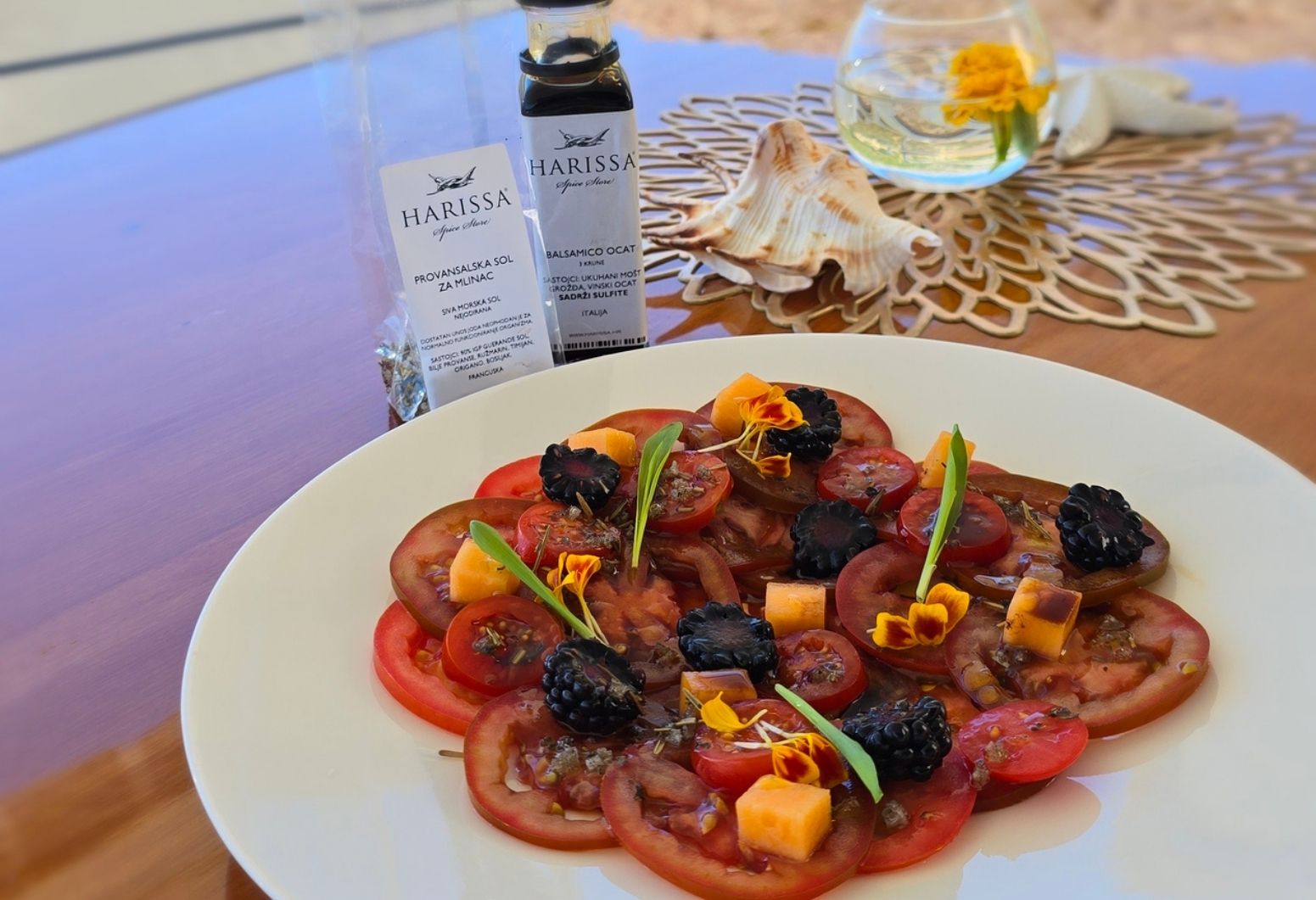
Summer Garden with Black Tomato, Melon, Black Raspberry and Harissa Provencal Salt
Summer Garden with Black Tomato
with Melon, Black Raspberry and Harissa Provençal Salt
Salad by Chef David Francesco Komadina